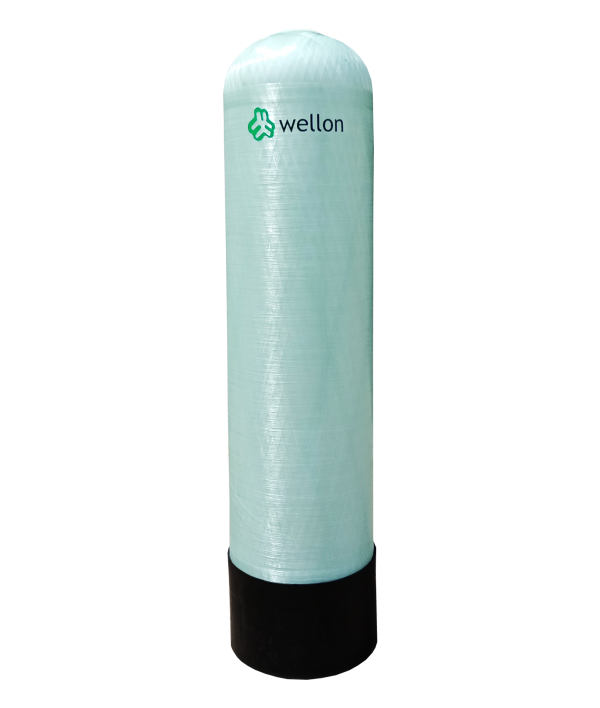
Made from fiberglass-reinforced plastic (FRP), which is known for its strength, corrosion resistance, and durability.
FRP vessels are lightweight compared to metal vessels, making them easier to handle and install.
Size & Capacity:
1354 FRP Vessel typically refers to the size, with 13 inches in diameter and 54 inches in height, offering a substantial filtration or softening capacity.
The vessel is used in larger water treatment systems for both residential and commercial purposes.
Applications:
Ideal for use in water softening systems, reverse osmosis (RO) units, filtration systems, and deionization.
Suitable for both municipal and well water treatment.
Scalability:
Often used in systems that require high flow rates, typically handling between 1000–3000 liters per hour of water flow.
Durability:
FRP vessels are resistant to rust, corrosion, and UV damage, making them highly durable for long-term use in both indoor and outdoor installations.
Low Maintenance:
Requires minimal maintenance, with periodic media replacement (such as resin for softeners) and cleaning.
Pressure Rating:
Designed to withstand pressures typical in water treatment systems (often up to 10 bar or more, depending on the model).
Benefits:
Corrosion-Resistant: Ideal for harsh water conditions, especially in areas with hard water or where the water is highly mineralized.
Lightweight: Easier to install compared to traditional steel vessels.
Cost-Effective: Durable and long-lasting, reducing the need for frequent replacements.
Versatile: Can be used for both residential and industrial water filtration and softening applications.
Common Applications:
Whole-House Water Softening Systems: Removes calcium and magnesium ions to prevent scale buildup on plumbing fixtures, appliances, and pipes.
Filtration Systems: Used in systems that treat water to remove suspended solids, chlorine, and other contaminants.
Commercial Water Treatment Systems: For large-scale water filtration or softening in industries like hospitality, manufacturing, and agriculture.