





Introduction
TDS is one of the most common terms you hear while buying a water purifier, but many people don’t know what it actually means. Understanding TDS helps you choose the right purification technology and ensures your family gets safe and healthy drinking water.
What is TDS?
TDS stands for Total Dissolved Solids. It represents the total amount of dissolved minerals, salts, and other substances present in water. TDS is measured in PPM (Parts Per Million).
Common dissolved substances include:
- Calcium
- Magnesium
- Sodium
- Potassium
- Chlorides
- Sulphates
- Bicarbonates
Some minerals are beneficial, while excessive dissolved solids may affect the taste and quality of drinking water.
Why is TDS Important?
The TDS level influences:
- Taste of drinking water
- Water quality
- Performance of water purifiers
- Filter and membrane life
A balanced TDS level provides better taste while retaining essential minerals.
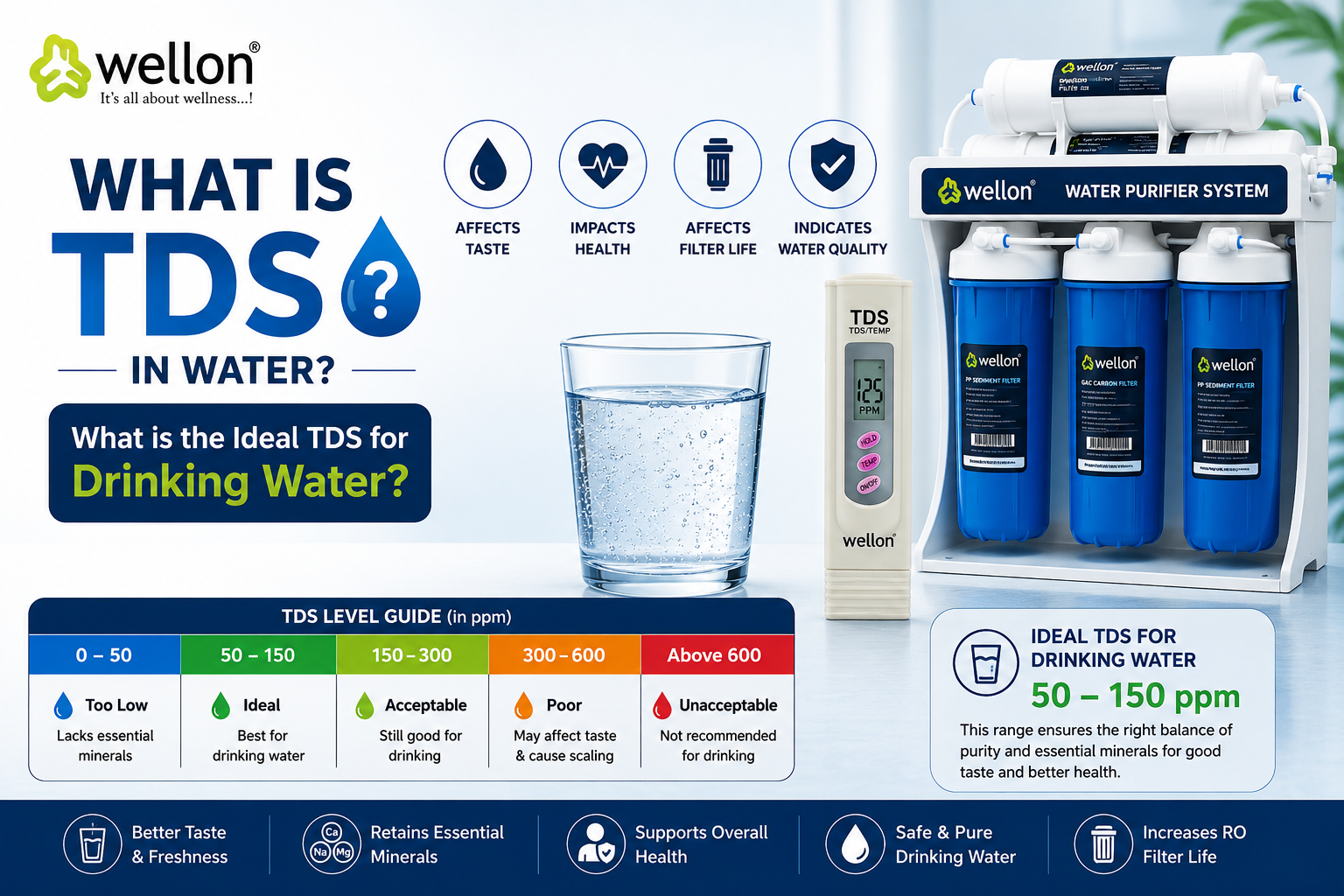
Ideal TDS for Drinking Water
| TDS Level | Water Quality |
|---|---|
| Below 50 ppm | Very Low Minerals |
| 50–150 ppm | ✅ Ideal for Drinking |
| 150–300 ppm | Good Quality |
| 300–600 ppm | Acceptable but may affect taste |
| Above 600 ppm | Not Recommended |
For most households, drinking water between 50 and 150 ppm offers the best balance of purity and essential minerals.
How Can You Check TDS?
Checking TDS is simple using a digital TDS meter.
Just dip the meter into a glass of water, wait a few seconds, and the display will show the TDS level in PPM. Regular testing helps monitor water quality and determine whether your purifier is performing efficiently.
Which Water Purifier Should You Choose?
- Below 200 ppm: UV or UF purification may be sufficient if the water source is microbiologically safe.
- Above 200 ppm: RO purification is generally recommended to reduce excess dissolved solids.
- Mixed Water Supply: RO + UV + UF systems provide comprehensive purification for varying water conditions.
Testing your source water before purchasing a purifier ensures you select the most suitable technology.
Conclusion
TDS is an important indicator of water quality, but it should not be the only factor when choosing a water purifier. The ideal drinking water should have balanced minerals, good taste, and be free from harmful contaminants. Regularly checking your water with a TDS meter helps maintain safe and healthy drinking water for your family.