





Introduction
Water may look clean, but its mineral content can vary significantly. Hard water and soft water affect your home, appliances, plumbing, and even your skin and hair. Understanding the difference helps you choose the right water treatment solution for better health and longer-lasting appliances.
What is Hard Water?
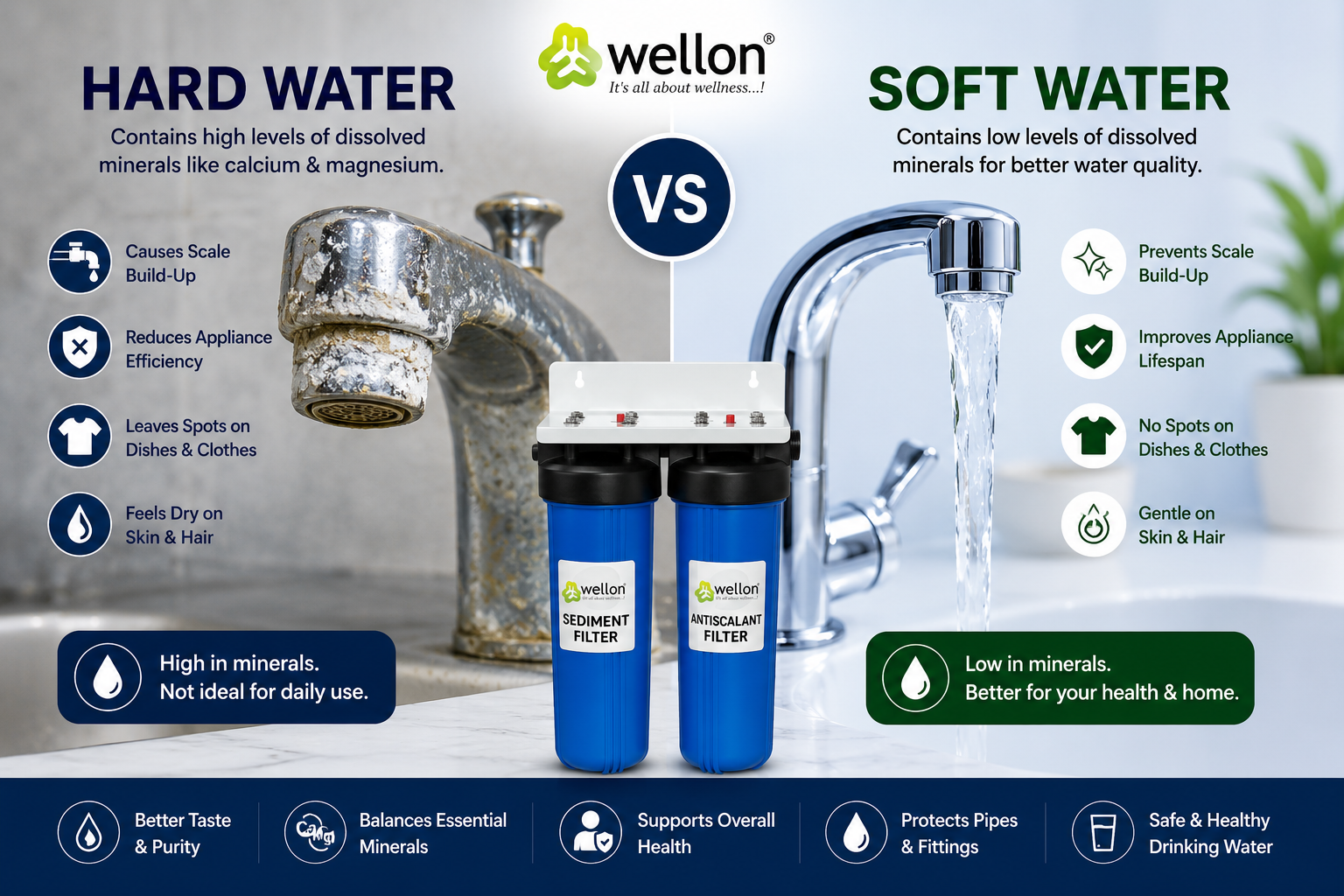
Hard water contains high levels of dissolved minerals, mainly calcium and magnesium. While these minerals are naturally present, excessive amounts can cause scaling and reduce the efficiency of household appliances.
Common Signs of Hard Water
- White scale deposits on taps and showerheads
- Soap doesn’t lather easily
- Dry skin and rough hair after bathing
- White spots on dishes and glassware
- Reduced efficiency of geysers and washing machines
What is Soft Water?
Soft water contains very low levels of calcium and magnesium. It feels smoother, cleans better, and helps protect household plumbing and appliances from scale buildup.
Benefits of Soft Water
- Prevents scale formation
- Improves appliance lifespan
- Better soap lather
- Cleaner dishes and clothes
- Softer skin and smoother hair
Hard Water vs Soft Water
| Feature | Hard Water | Soft Water |
|---|---|---|
| Mineral Content | High | Low |
| Scale Formation | High | Very Low |
| Soap Lather | Less | Better |
| Appliance Life | Reduced | Longer |
| Skin & Hair | Can feel dry | Feels softer |
| Cleaning Performance | Lower | Better |
Which Water is Better?
For drinking, moderate minerals are beneficial. However, for household use, excessive hardness can damage plumbing fixtures, geysers, washing machines, dishwashers, and water purifiers over time.
If your water supply has high hardness, installing a mainline sediment and antiscalant filter or a water softener can significantly improve water quality and protect your home.
How to Reduce Hard Water Problems?
Simple solutions include:
- Install a sediment + antiscalant pre-filter.
- Use a water softener for high-hardness water.
- Clean faucets and showerheads regularly.
- Service water purification systems on time.
- Test your water periodically to monitor hardness levels.
Conclusion
Hard water isn’t necessarily unsafe to drink, but excessive minerals can create problems for your plumbing, appliances, and daily comfort. Choosing the right filtration or water treatment solution helps protect your home while providing cleaner and better-quality water for everyday use.