





Introduction
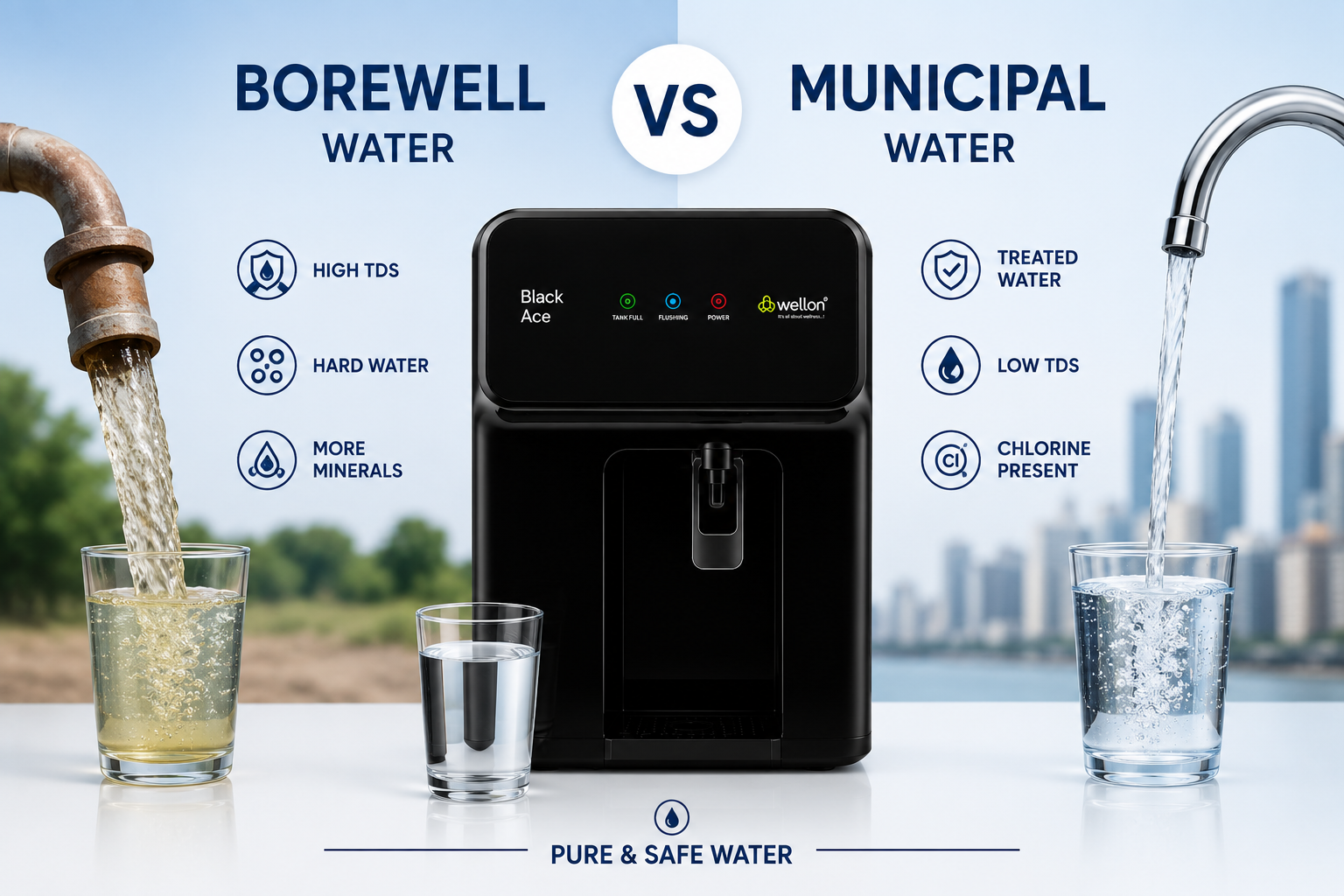
Not all water sources are the same. Borewell water and municipal (city supply) water differ in mineral content, hardness, and impurities. Understanding these differences helps you choose the right water purification system for your home.
1. Borewell Water
- Usually has high TDS and dissolved minerals.
- May contain hardness, iron, fluoride, or salts.
- Can cause scale buildup in plumbing and appliances.
- RO purification is highly recommended.
2. Municipal Water
- Treated before reaching your home.
- Usually has lower TDS but may contain chlorine and sediments.
- Water quality varies from city to city.
- RO, UV, or UF can be selected based on the actual TDS level.
3. Key Differences
| Feature | Borewell Water | Municipal Water |
|---|---|---|
| TDS Level | High | Low to Medium |
| Hardness | High | Low |
| Chlorine | Usually No | Usually Yes |
| Minerals | More | Less |
| Best Purifier | RO | RO / UV / UF (depends on TDS) |
4. Which Water Needs RO?
- TDS above 300–500 ppm: RO is recommended.
- Hard water: RO helps reduce dissolved salts and hardness.
- Low TDS municipal water: UV or UF may be sufficient in some cases.
5. Test Before You Buy
Always check your water quality using a TDS meter or a professional water test before selecting a purifier.
Conclusion
Both borewell and municipal water can be made safe for drinking with the right purification technology. The best purifier depends on your water source, TDS level, and contaminants. Testing your water first ensures better performance and longer purifier life.